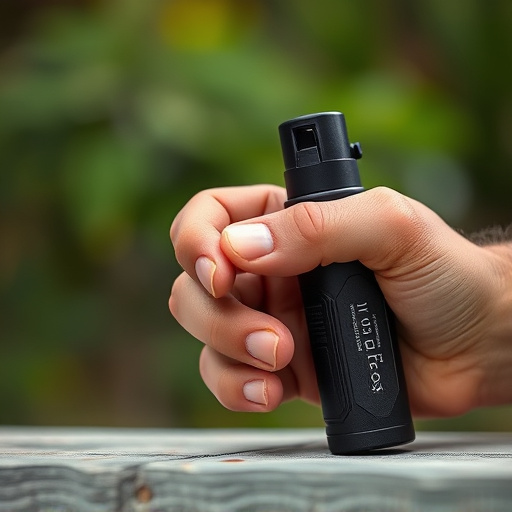
The Altitude Effects on Pepper Spray significantly impact its performance in mountainous regions. At lower altitudes, pepper spray has longer range due to finer droplets and higher atmospheric pressure. Conversely, at higher elevations, coarser droplets reduce reach, and air dilution lowers capsaicin concentration, diminishing potency. Users hiking or camping in bear habitats should employ short bursts (1-2 seconds) at 2-3 feet distance to maintain effectiveness, aiming directly at the bear's face and eyes. Understanding these altitude effects is vital for successful deployment of pepper spray under diverse environmental conditions.
“Bear spray, a powerful defense against aggressive bears, has become an essential tool for outdoor enthusiasts navigating high-risk areas. This article delves into the effectiveness of bear spray, exploring its ingredients and how altitude influences spray range and intensity (Altitude Effects on Pepper Spray).
We’ll guide you through proper usage techniques to ensure optimal protection during encounters. Additionally, we’ll discuss real-world scenarios where bear spray deployment can be crucial, offering insights for safe and informed outdoor adventures.”
- Understanding Bear Spray: Ingredients and Effectiveness
- Altitude's Impact on Spray Range and Intensity
- Proper Usage Techniques for Optimal Protection
- Real-World Scenarios: When and Where to Deploy Bear Spray
Understanding Bear Spray: Ingredients and Effectiveness
Bear spray, also known as pepper spray designed for wildlife encounters, is a specialized defense mechanism used to deter aggressive bears. Unlike traditional pepper spray, bear spray formulations are tailored with ingredients effective against larger animals like grizzly and black bears. The primary active ingredient, capsaicin, is derived from chili peppers and works by irritating the eyes, nose, and respiratory system of the target animal.
The effectiveness of bear spray can be influenced by various factors, with altitude being a significant one. Research suggests that lower atmospheric pressure at higher altitudes reduces the concentration and impact of pepper spray particles in the air. This means that bear spray may not perform as expected or provide the same level of protection in mountainous regions compared to lower-lying areas. Therefore, users in alpine environments should be aware of these altitude effects on pepper spray performance and consider additional precautions when navigating bear country.
Altitude's Impact on Spray Range and Intensity
The altitude at which an individual is situated can significantly influence the range and effectiveness of bear spray. As elevation increases, air pressure decreases, causing the spray’s droplet size to change. This alteration in droplet size directly impacts how far and effectively the spray reaches its target. At lower altitudes, where atmospheric pressure is higher, bear spray tends to have a longer range due to finer droplets that travel more efficiently. Conversely, at higher elevations, coarser droplets formed at lower pressures may reduce the spray’s reach, making it less ideal for long-range defense.
Moreover, altitude can also affect the intensity of the spray’s sting and irritation. In general, as elevation increases, the concentration of capsaicin (the active ingredient in bear spray) per unit volume decreases, potentially reducing its potency. This is because air dilution plays a role in how the spray disperses and interacts with the animal’s sensory systems. Understanding these altitude effects on pepper spray can help hikers and outdoor enthusiasts choose appropriate products for their specific terrain and adjust their defensive strategies accordingly.
Proper Usage Techniques for Optimal Protection
Proper usage techniques are crucial for ensuring optimal protection from bear spray. When using bear spray, it’s essential to aim for the animal’s face and eyes, as this is where the pepper spray will have the most impact. Hold the canister at close range, typically around 2-3 feet away, and spray in short bursts of 1-2 seconds. This approach delivers a powerful concentration of capsaicin directly into the bear’s sensitive areas, temporarily blinding and disorienting it.
Altitude can significantly affect the effectiveness of pepper spray. In high altitudes, air pressure decreases, causing the spray to dissipate more quickly. This means that the range and potency of the spray may be reduced. As a result, it’s particularly important to use short bursts and ensure direct contact with the target animal at higher elevations. Understanding these altitude effects on pepper spray allows users to adapt their techniques, ensuring maximum protection in various environmental conditions.
Real-World Scenarios: When and Where to Deploy Bear Spray
In real-world scenarios, bear spray is most effective in close encounters where an individual finds themselves face-to-face with a bear. These situations typically arise during outdoor activities like hiking, camping, or even while simply walking through forests or remote areas known for bear habitats. The key to successful deployment lies in recognizing early warning signs from the bear, such as its presence and behavior, before it becomes aggressive.
Altitude plays a crucial role in the effectiveness of pepper spray. At lower elevations, where the air is denser, the spray’s range and impact are generally better due to reduced dispersion. However, as altitude increases, the thinner air can cause the spray to dissipate faster and spread out more widely. This phenomenon, known as the altitude effect on pepper spray, underscores the importance of understanding local conditions before deciding when and where to deploy bear spray during outdoor adventures.
Bear spray is a valuable tool for personal defense against bear attacks, but understanding its effectiveness and proper usage is crucial. In terms of altitude effects on pepper spray, higher elevations can impact spray range and intensity, so knowing your surroundings is essential. By mastering the techniques discussed, you’ll enhance your protection in real-world scenarios, such as hiking or camping in bear country. Remember that while bear spray isn’t a guarantee, it can provide valuable time to escape or deter an attack.