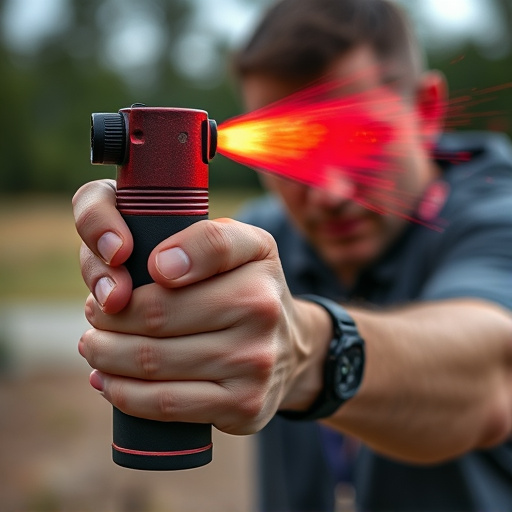
The Altitude Effects on Pepper Spray significantly impact its reach, intensity, and overall effectiveness as a self-defense mechanism. At higher altitudes, reduced air pressure causes pepper spray particles to disperse faster, reducing range and concentration. This variation in altitude affects both the physical dispersion of the spray and capsaicin absorption, potentially increasing sting intensity but raising inhalation risk for vulnerable individuals. Understanding these effects is crucial for optimal pepper spray use in diverse environments, especially during outdoor activities or in high-altitude regions, where tactical planning must account for wind patterns, building density, and open terrain to ensure reliable performance.
“Uncover the power and limitations of pepper spray as a self-defense mechanism, especially considering altitude’s significant effects. This article delves into the science behind pepper spray, exploring its non-lethal capabilities and how altitude influences its range and effectiveness. We analyze various factors impacting performance at different heights, providing practical insights for real-world applications. Additionally, case studies highlight the tangible impact of altitude on pepper spray’s outcomes, offering a comprehensive guide for individuals seeking to understand this defense tool.”
- Understanding Pepper Spray: A Non-Lethal Weapon
- Altitude and Its Influence on Spray Range and Effectiveness
- Factors Affecting Pepper Spray Performance at Different Elevations
- Practical Considerations for Using Pepper Spray as a Defense Mechanism
- Case Studies: Evaluating Altitude's Impact on Real-World Scenarios
Understanding Pepper Spray: A Non-Lethal Weapon
Pepper spray, a non-lethal weapon, has become a popular self-defense mechanism for individuals seeking to deter potential assailants. It works by causing irritation and temporary blindness in the eyes and respiratory system of the target, allowing the user time to escape or seek help. The active ingredient in pepper spray is capsaicin, a chemical compound derived from chili peppers, which explains its burning sensation when exposed to skin and eyes.
Altitude can significantly affect the effectiveness of pepper spray. In lower altitudes, the spray tends to stay closer to the ground due to reduced wind resistance, ensuring it reaches the target effectively. However, at higher altitudes, where air pressure decreases, pepper spray particles may disperse more quickly, potentially reducing their impact range and intensity. Understanding these altitude effects is crucial for individuals planning to carry pepper spray as a defense mechanism in varied environments.
Altitude and Its Influence on Spray Range and Effectiveness
The altitude at which a pepper spray deterrent is deployed can significantly impact its range and effectiveness. As elevation increases, air density decreases, affecting the speed and distance that pepper spray particles travel. At higher altitudes, the fine spray mist may disperse more quickly, reducing its concentration over a given area. This can be particularly relevant in outdoor settings or urban environments where individuals might need protection while at different heights, such as on a rooftop or atop a building.
Moreover, altitude influences how the body processes the capsaicin contained within pepper spray. At lower pressures, the absorption of capsaicin into the respiratory system and skin may be slightly faster due to increased oxygen levels. This could enhance the intensity of the sting felt by the target, making the deterrent more effective but also potentially increasing the risk of inhalation issues in vulnerable individuals. Understanding these altitude effects is crucial for optimizing the use of pepper spray deterrents in diverse environments.
Factors Affecting Pepper Spray Performance at Different Elevations
The performance of pepper spray as a deterrent can be significantly influenced by altitude or elevation. As one moves to higher altitudes, air pressure decreases, which can alter the dispersion and effectiveness of pepper spray. Lower atmospheric pressure means that the spray mist may not travel as far or spread as widely as it would at sea level, potentially reducing its reach and impact on potential assailants. This is an essential consideration for individuals carrying pepper spray in mountainous regions or high-altitude cities.
Additionally, temperature variations with altitude can affect the viscosity of pepper spray, impacting its application. Warmer temperatures at lower elevations might cause the spray to become less viscous, allowing it to spread more easily and potentially increasing its range. Conversely, colder air at higher altitudes could make the spray thicker, reducing its ability to travel far and reach targets effectively. These altitude effects on pepper spray underscore the importance of understanding environmental conditions when relying on such a defense mechanism.
Practical Considerations for Using Pepper Spray as a Defense Mechanism
When considering pepper spray as a defense mechanism, practical considerations are paramount. One key factor is understanding the altitude effects on pepper spray. Higher altitudes can reduce the effectiveness of pepper spray due to lower air pressure, potentially impacting its range and intensity. This means that in mountainous regions or high-elevation areas, individuals may need to employ additional strategies for optimal protection.
Additionally, proper usage techniques are essential. Users must ensure they aim accurately and apply enough spray to disrupt an attacker’s vision and breathing without risking exposure. Training and familiarity with the device’s operation are crucial to guarantee its reliability in stressful situations. Regular maintenance and awareness of expiration dates also contribute to ensuring its potency remains effective when needed most.
Case Studies: Evaluating Altitude's Impact on Real-World Scenarios
In evaluating the effectiveness of pepper spray deterrents, studying altitude’s impact offers valuable insights into real-world scenarios. Research has shown that higher altitudes can significantly affect the performance and range of pepper spray. For instance, case studies have demonstrated that wind patterns and reduced atmospheric pressure at elevated heights can cause pepper spray to dissipate more quickly, reducing its effectiveness as a deterrent. This is crucial information for individuals in outdoor settings or high-altitude regions who rely on pepper spray for self-defense.
Understanding the altitude effects on pepper spray is essential for tactical planning. In urban areas with multiple buildings and narrow spaces at street level, pepper spray may remain potent due to limited dispersion. Conversely, open fields or mountainous terrain can rapidly disperse the spray, making it less reliable as a deterrent. These findings underscore the need for users to consider environmental factors when choosing and deploying pepper spray, ensuring its optimal effectiveness in various scenarios.
The understanding of how altitude influences pepper spray performance is paramount in optimizing its effectiveness as a defense mechanism. In diverse environments, from urban street levels to elevated terrain, factors like air density and wind patterns significantly affect spray range, concentration, and impact. By considering these “Altitude Effects on Pepper Spray,” individuals can make informed decisions when employing this non-lethal tool for self-defense, ensuring its optimal utilization in various real-world scenarios.