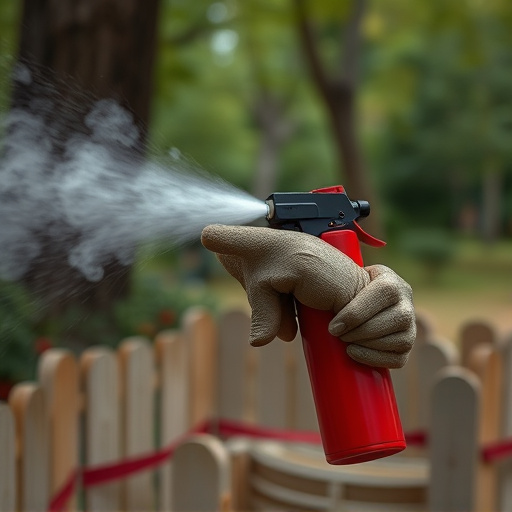
Altitude significantly affects pepper spray performance by altering atmospheric pressure and air density, impacting range, concentration, and dispersion. At higher elevations, reduced pressure can decrease effectiveness in open spaces. Users in mountainous regions or high-altitude cities must adapt strategies through targeted training and understanding these dynamics to ensure optimal defense.
“Unveiling the effectiveness of handheld pepper spray defense units in varying atmospheric conditions, especially at high altitudes, is a crucial consideration for personal safety. This article delves into the intricate dynamics of pepper spray performance in such environments. We explore how altitude significantly impacts spray range and potency, dissecting the science behind its sensory-disrupting effects. Additionally, safety guidelines are presented for responsible use at elevated heights, along with strategies to optimize deployment during varying atmospheric conditions, offering a comprehensive understanding of the altitude effects on pepper spray.”
- Understanding Pepper Spray Dynamics at High Altitudes
- How Altitude Affects Spray Range and Effectiveness
- The Science Behind Pepper Spray's Impact on Sensory Perception
- Safety Considerations for Handheld Devices at Elevated Heights
- Optimal Deployment Strategies in Varied Atmospheric Conditions
Understanding Pepper Spray Dynamics at High Altitudes
The dynamics of pepper spray performance are significantly influenced by altitude, a factor often overlooked in self-defense strategies. As elevation increases, atmospheric pressure decreases, which can lead to variations in how pepper spray operates. At higher altitudes, the reduced pressure affects the spray’s projection and dispersal; it may not travel as far or spread as widely as it would at sea level. This change in behavior could impact the effective range of the spray, potentially reducing its utility in open spaces or outdoor scenarios.
Understanding these altitude effects on pepper spray is crucial for individuals living or traveling in mountainous regions or high-altitude cities. Training and practicing with pepper spray devices under such conditions can help users anticipate and adapt to these changes, ensuring optimal defense strategies regardless of location.
How Altitude Affects Spray Range and Effectiveness
The effectiveness of handheld pepper spray can be significantly influenced by altitude, as the air density varies with elevation. At higher altitudes, where the air is thinner, pepper spray particles tend to spread more widely and travel farther than they would at sea level. This increased range can be beneficial in open areas or during escape attempts, ensuring a wider area is protected. However, it’s essential to consider that the reduced air density can also lead to decreased concentration of the spray, potentially reducing its impact on the target.
As altitude increases, the lower pressure and temperature can cause pepper spray to evaporate more quickly, leading to a shorter duration of effect. This is particularly relevant in colder climates where condensation could occur, affecting the spray’s performance. Conversely, very high altitudes may result in reduced wind speeds, allowing for better control over the spray direction and minimizing off-target effects.
The Science Behind Pepper Spray's Impact on Sensory Perception
Pepper spray, a powerful defense tool, works by targeting the human senses, specifically the eyes and respiratory system. The active ingredient, capsaicin, is a natural compound derived from chili peppers that binds to specific receptors in the body, triggering an intense inflammatory response. This reaction leads to temporary blindness, excessive tearing, congestion, and difficulty breathing—effects that can be especially pronounced at higher altitudes.
Altitude significantly influences pepper spray’s impact on sensory perception. As elevation increases, atmospheric pressure decreases, affecting the concentration and intensity of capsaicin in the air. At higher altitudes, pepper spray may require closer proximity to the target or slightly more product to achieve the same level of effectiveness as at sea level. This is due to the reduced density of the air, which can dilute the spray’s potency. Understanding these altitude effects allows users to adjust their tactics accordingly, ensuring optimal defense and safety in diverse environments.
Safety Considerations for Handheld Devices at Elevated Heights
When considering handheld pepper spray defense units for use at elevated heights, it’s crucial to understand the unique safety considerations that come into play. The altitude effects on pepper spray can significantly alter its performance and user experience. At higher altitudes, the air pressure decreases, which can impact the spray’s range, penetration, and overall effectiveness. This is because the reduced air pressure affects the dispersion and droplet size of the pepper spray solution.
Moreover, using a handheld device at great heights introduces risks beyond those associated with the spray itself. Users must be vigilant about balance and stability to avoid accidents. Proper training and understanding of the unit’s limitations are essential. For instance, certain environmental factors like wind can complicate matters, potentially causing the spray to drift off target or even blow back towards the user. Therefore, users operating these devices at elevated heights should always prioritize safety protocols and be prepared for unexpected conditions.
Optimal Deployment Strategies in Varied Atmospheric Conditions
The optimal deployment strategy for a handheld pepper spray defense unit can vary significantly based on atmospheric conditions, particularly altitude. At lower altitudes, where air pressure is higher, pepper spray projectiles tend to travel farther and maintain their potency, making them effective for close-to-mid range defenses. However, as altitude increases, the reduced air pressure alters the spray’s trajectory and dispersion, potentially reducing its effectiveness at longer ranges.
To account for these altitude effects on pepper spray, users should adjust deployment techniques accordingly. In high-altitude areas, it may be necessary to use more focused, shorter bursts to ensure the spray reaches its target effectively. Additionally, understanding local weather conditions, such as wind patterns and humidity, can provide valuable insights into how these factors interact with the spray’s performance at different altitudes, further enhancing the user’s ability to deploy the defense unit successfully.
In conclusion, understanding the dynamics of pepper spray at high altitudes is crucial for optimal deployment strategies. The altitude effects on pepper spray range and effectiveness highlight the need for strategic usage in varied atmospheric conditions. By leveraging the science behind its impact on sensory perception, users can maximize safety considerations when employing handheld pepper spray defense units at elevated heights.