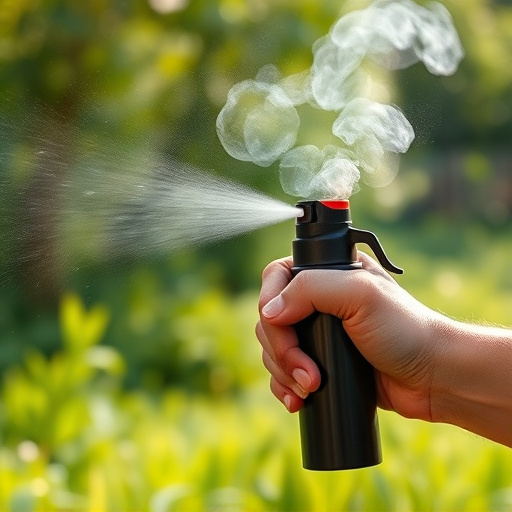
Altitude significantly impacts pepper spray performance through reduced air density, affecting range and penetration. Lower atmospheric pressure alters capsaicin concentration and spray viscosity, diminishing irritant effect and accuracy. Understanding these altitude effects is crucial for users to adapt self-defense strategies in elevated environments, ensuring optimal effectiveness during outdoor activities or in mountainous regions. Legal regulations vary by region, so thorough research is essential before using pepper spray at higher altitudes.
In today’s dynamic world, understanding the effectiveness of self-defense tools like handheld pepper spray is crucial, especially at varying altitudes. The altitude effects on pepper spray are a game-changer, influencing its aerosol distribution and range. This article delves into the science behind these factors, offering insights on optimal deployment techniques in elevated environments. We explore legal considerations and range limitations, providing essential knowledge for responsible self-defense preparation against potential threats at high altitudes.
- Understanding Pepper Spray's Effectiveness at Altitude
- Factors Influencing Aerosol Distribution in High Elevations
- Optimal Deployment Techniques for Elevated Environments
- Legal Considerations and Range Limitations in Higher Altitudes
Understanding Pepper Spray's Effectiveness at Altitude
Pepper spray, a powerful self-defense tool, has been widely used for its effectiveness in neutralizing attackers. However, its performance can be influenced by various factors, including altitude. As one ascends to higher elevations, the impact of pepper spray might not be as predictable or potent due to several reasons.
The reduced atmospheric pressure at higher altitudes can affect the concentration and delivery of capsaicin, the active ingredient in pepper spray. This change in pressure may lead to a lessening of its irritant effect on the eyes and respiratory system. Additionally, the viscosity of the spray might alter, impacting its range and accuracy. Understanding these altitude effects is crucial for users to adjust their tactics and ensure the spray’s effectiveness during outdoor activities or in regions with varying elevations.
Factors Influencing Aerosol Distribution in High Elevations
The distribution and effectiveness of pepper spray can be significantly influenced by altitude, or high elevations. As the height above sea level increases, atmospheric pressure decreases, which in turn alters the behavior of the aerosolized spray particles. At higher altitudes, the reduced air density affects the spraying range and penetration power of the pepper spray. Typically, spray range tends to decrease with increasing altitude due to the weaker upward force that carries the aerosolized droplets.
Additionally, temperature variations at different elevations can lead to changes in the viscosity and evaporation rate of the pepper spray solution. These factors collectively impact the dispersion pattern, causing potential differences in how the spray is perceived by targets located at varying heights. Understanding these altitude effects on pepper spray performance is crucial for users to ensure optimal protection and strategic deployment in mountainous or elevated environments.
Optimal Deployment Techniques for Elevated Environments
In elevated environments, such as mountains or high-rise buildings, the deployment of handheld pepper spray defense units requires strategic considerations unique to altitude effects on pepper spray. The air density at higher altitudes is lower, which can alter the spray’s range and effectiveness. Pepper spray projectiles may not travel as far or penetrate obstacles as effectively due to reduced air resistance. This calls for a closer proximity when aiming, ensuring the target is within a shorter effective range.
To optimize deployment techniques, users in elevated settings should focus on tactical positioning and rapid response. Placing the defense unit in easily accessible locations, such as windowsills or specific floor landing spots, allows for quick retrieval during emergencies. Additionally, training individuals to deploy the spray at angles that account for reduced air density can help maximize its impact distance and prevent premature dissipation of the pepper spray cloud, ensuring a safer and more effective response strategy.
Legal Considerations and Range Limitations in Higher Altitudes
When considering a handheld pepper spray defense unit, especially for outdoor activities in higher altitudes, it’s crucial to understand legal considerations and range limitations. Each jurisdiction has specific laws regarding the use and possession of pepper spray, so users must familiarize themselves with local regulations to avoid legal repercussions. In some regions, restrictions on the type and amount of pepper spray allowed, as well as permitted uses, can vary significantly.
Altitude effects on pepper spray are also notable. As elevation increases, air pressure decreases, which can impact the spray’s range and effectiveness. In higher altitudes, pepper spray may not travel as far or be as potent due to these atmospheric changes. This is particularly important for outdoor enthusiasts and individuals in remote areas where distance and altitude play a significant role in the spray’s utility as a defense mechanism.
Handheld pepper spray remains an effective self-defense tool, but its performance is significantly influenced by altitude. Understanding how elevation affects aerosol distribution and range ensures optimal deployment techniques for maximum effectiveness in high-altitude environments. While legal considerations and limitations in range must be respected, savvy users can leverage the right techniques to ensure their safety in diverse conditions. In navigating these factors, individuals can make informed decisions, enhancing their ability to defend themselves in various settings, including mountainous or elevated areas.